
 EREN
Nutritional Epidemiology Research Team
EREN
Nutritional Epidemiology Research Team

EREN
Nutritional Epidemiology Research Team
EREN
Nutritional Epidemiology Research TeamSearch
Total: 21 results found.
Page 1 of 2
Research
Our overarching goals are to elucidate the complex relationships between nutrition and health, to understand the mechanisms underlying these relationships, and to carefully investigate the full spectrum of determinants of dietary behaviors. We strive to provide evidence-based knowledge for the elaboration and refinement of public health policies with the aim of improving primary and tertiary prevention of chronic diseases through healthy and sustainable nutrition.
We continually develop innovative epidemiological research programs in collaboration with academic partners from diverse disciplines (experimental and clinical research, sociology, psychology, social marketing, economy and agriculture). Our ambition is to be able to integrate emerging knowledge at multiple levels, from omics and other biomarkers to holistic macro-level risk factors. This will allow us to better grasp the complex roles of nutritional and other causes of chronic disease, beyond the traditional “risk factor – pathology” approach.
Our research reflects the main priorities of Inserm as outlined in its Strategic Plan 2015-2020. Notably, Priority # 1 pertains to integrated and multidisciplinary research, adapted to the needs and expectations of society and of public health policies (objective 5 of research plan in public health). Our research work is also fully in line with the 2016 Inra AlimH Department Strategic Scheme (CT1-4).
Our research work can be grouped into 3 thematic research axes and 1 cross-sectional methodological axis:
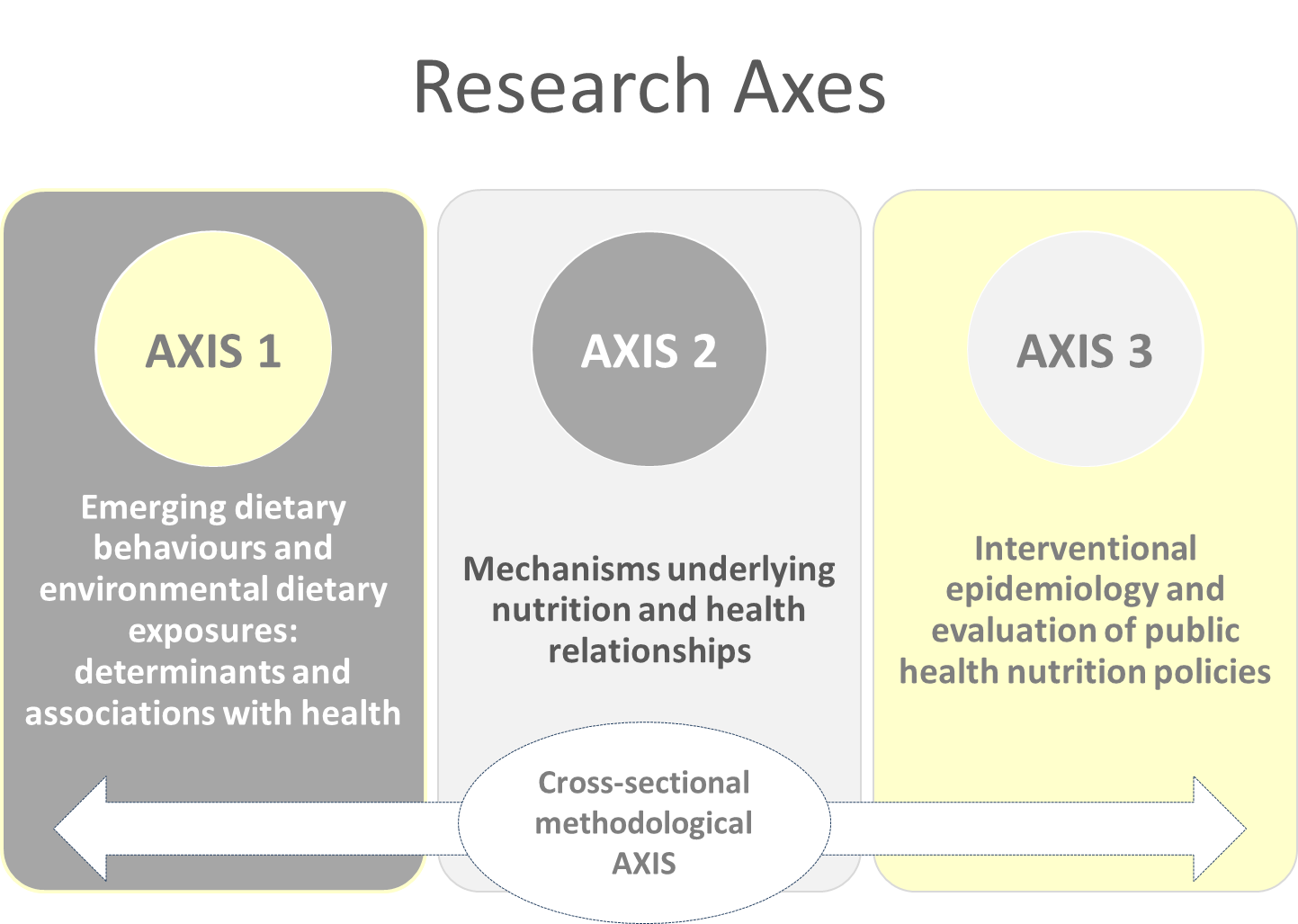
AXIS 1: Emerging dietary behaviors and environmental dietary exposures: determinants and associations with health
Some of our main research work is focused on emerging and little known nutritional exposures and behaviors. In fact, the existing prospective cohorts worldwide often have access to somewhat limited nutritional data (e.g. few dietary recalls or records, semi-quantitative FFQs), with no possibility of taking into account emerging exposures and nutrition-related behaviors. In contrast, the NutriNet-Santé e-cohort represents a great opportunity to explore such new areas, using detailed, up-to-date dietary data collected through repeated 24h dietary records (3 every 6 months); these records are in turn crossed with a food composition database containing >3,300 items, each decline in several dozens of commercial brands, with a supplementary FFQ, and with a substantial number of specific questionnaires on dietary practices and exposures that continually enrich our databases. Our research focuses on:
• Emerging dietary exposures
• Novel determinants of dietary practices: e.g. psychological, geographical, intuitive eating, sources of food supply, complex multi-determinant models
• Nutrition and dietary practices of specific subgroups
AXIS 2: Mechanisms underlying the nutrition and health relationships
Mechanisms underlying nutrition-health associations remain largely unexplored. Their clarification is key to 1) better understand disease etiology, 2) increase the weight of evidence of the established relationships, and 3) gather knowledge about the bioactive nutritional compounds involved in order to refine prevention strategies. Our well-phenotyped cohorts coupled with the associated large biobanks (containing samples of blood, urine, DNA, NutriNet-Santé n=19 600; SU.VI.MAX n=13 017) allow us to develop innovative research projects with a focus on:
- The interplay between epidemiology and experimental research: Mutlidisciplinary projects are being set up in which the work derived from diverse expertise domains is mutually enriching.
- Omics: Discovery of new biomarkers of disease risk and exploration of the food metabolome, linked with our very detailed dietary data in order to uncover novel biomarkers of usual nutritional exposure.
- Gut microbiota (role of nutrition, microbiota of specific populations, associations with health outcomes): EREN coordinates the CRESS Microbiota working group and participated in the FP7 UE Metacardis program. In 2017, we began work on a new research program on nutrition, metabolomics, microbiota and immunity within the framework of the LabEx “Milieu Interieur” Consortium to which EREN belongs (n=1000 healthy blood and stool donors, of whom 500 have provided two samples one month apart, and 150 of whom also participate in the NutriNet-Santé cohort). We have started stool collection for subsamples of the NutriNet-Santé cohort and plan to extend the collect to a broader range of participants in a near future. We are also planning case-cohort studies to investigate blood biomarkers of microbiota activity associated with health outcomes.
AXIS 3: Interventional epidemiology and evaluation of public health nutrition policies
Our investigation of the impact of various public health nutrition policies is strengthened by knowledge about the determinants of social inequalities regarding nutrition and health and knowledge about the differential impact of such policies across social strata. We are involved in the “Precision Public Health” innovative framework which brings together expertise from epidemiology (EREN), economy (INRA ALISS/GAEL), sociology (LEPS Paris 13 University) and marketing (RITM Paris South University and INSEEC). We continually develop observational, interventional and simulation studies for the study of the efficacy of front-of-pack nutrition labels, food taxation, and for the reduction of social inequalities regarding nutrition in disadvantaged subgroups. For these projects we rely on data from the NutriNet-Santé cohort, and also envision the set-up of ad hoc intervention studies (for example: students from Nice and Paris 13 Universities, cancer patients from the Seintinelles program, etc.). Overall, research in Axis 3 has 3 main priorities:
• Develop theoretical frameworks for evaluation of the impact of public health nutrition strategies and policies
• Develop experimental and epidemiological research on public health nutrition interventions
• Model the potential impact of public health nutrition interventions
CROSS-SECTIONAL METHODOLOGICAL AXIS
Our team is well positioned at the national and international level regarding methodological expertise in nutritional epidemiology. Specifically, our work focuses on:
• E-epidemiology: We continue to pursue our methodological research in this area. Notably, the potential of connected devices as sources of epidemiological data is explored through observational and interventional studies aiming at improving exposure assessment (e.g. bracelet-derived data on physical activity, geolocation) or for testing the effect of an intervention (e.g. scanning of bar codes to determine the “Nutriscore” of different foods).
• Medico-administrative databases: EREN was the first research team in France to obtain authorization by the State Council (in 2012) to link data from our cohorts with data from the national health insurance system (which includes detailed information on prescription medication use, sick leaves, etc). In addition to augmenting our databases, such access allows us to set up specific programs focused on long-term drug use in interaction with nutrition.
• Innovative statistical methods and big data: The complexity and size of epidemiological data are increasing exponentially. Innovative approaches (mediation analyses, complex nutritional/toxicological exposure profiles, models of diet optimization, data mining approaches) are being tested to answer new and complex questions raised by nutrition and health research.
• Advanced dietary exposure assessment: Given our detailed assessment of nutritional exposures coupled with the clinico-biological data stored within our large biobanks, our cohorts are particularly suitable for methodological research in dietary exposure assessment. Our aims are 1) to uncover novel biomarkers of nutritional exposure (e.g. by untargeted MS metabolomics exploring the food metabolome), and 2) to assess inter- and intra-individual variability and stability of nutritional biomarkers, metabolomic signatures and microbiota composition.
PhD and postdoctoral students
|
EREN PhD students |
Visiting PhD |
|||
 |
Andrianasolo Roland |
|
||
 |
Chaltiel Dan |
|
||
 |
Chazelas Eloi |
|
||
|
Egnell Manon | |||
 |
Lecuyer Lucie |
|||
 |
Partula Valentin |
|||
|
Rebouillat Pauline |
|||
|
Rezki Amel |
|||
 |
Seconda Louise |
|||
 |
Srour Bernard |
|||
|
EREN postdoctoral students |
|
|
Carra Maria Clotide |
|
Deschasaux Mélanie |
|
Detzen Laurent |
|
Fassier Philippine |
|
Fessi Sabrine |
|
Hamdi Zeineb |
 |
Lelong Hélène |
 |
Monchy Léa - chargée de projet Carpem |
Engineers/Technicians/Administrative agents
|
|
Operational Manager : Druesne-Pecollo Nathalie |

| Dietetic department |
|||
 |
Agaesse Cédric |
||
 |
Desan Vristi |
 |
Perlin Cynthia |
| Datamanagement/statistics department |
||||||||
|
||||||||



| Support department |
||||||||
|
||||||||




| Medical department |
||
|
||
| Communication department |
||
|
||

|
||||||||||||




|
||||||

| NACRe network | ||||
|
||||


Research scientists
|
EREN Director |
|||||
|
|||||

|
EREN Scientists |
ESEN Scientists |
||
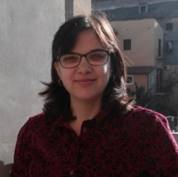 |
Andreeva Valentina | 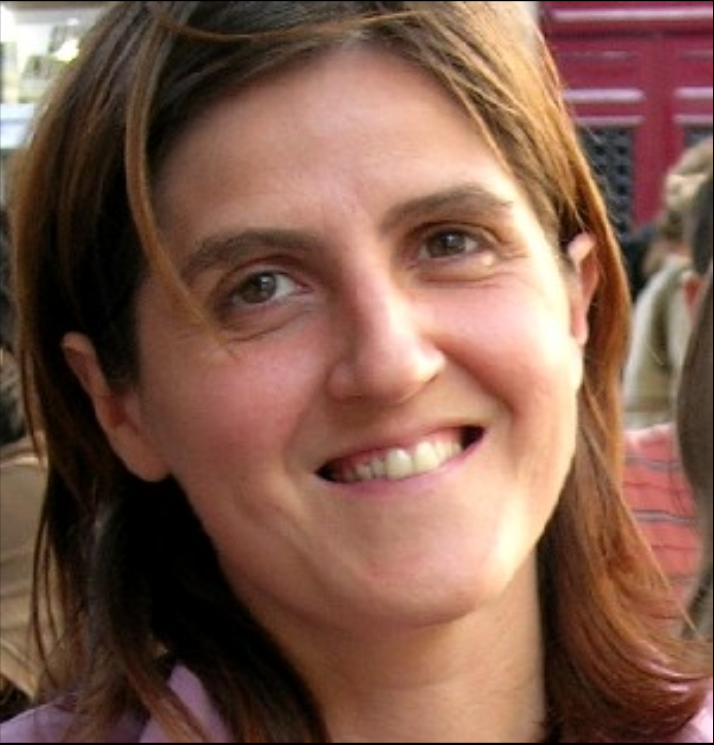 |
Deschamps Valérie |
 |
 |
Salanave Benoît | |
 |
Bihan Hélène |
 |
Verdot Charlotte |
 |
|||
 |
|||
 |
|||
 |
|||
 |
De Brauer-Buscail Camille | ||
 |
|||
 |
Feuillet Thierry | ||
 |
Fezeu Léopold | ||
 |
Galan Pilar | ||
 |
Julia Chantal | ||
 |
Kesse-Guyot Emmanuelle | ||
 |
Latino-Martel Paule | ||
 |
Oppert Jean-Michel | ||
 |
Péneau Sandrine | ||
 |
Rolland-Cachera Marie-Françoise | ||
 |
Zelek Laurent | ||
Team
The EREN team consists of 69 people (going up to 80 when including Master’s degree students):
• 24 researchers (14 hold an Accreditation to Supervise Research: French HDR) affiliated to research institutes (INSERM, INRA); Universities (P13; P5; P6; P8; P12); hospital (APHP); or government agencies (Santé Publique France, ESEN)
• 24 engineers/technicians: 12 permanent agents from INSERM, INRA, P13, CNAM; and 12 non-permanent staff (CDD)
• 7 Postdoctoral fellows and 11 Ph.D. students (present on January 2019) / 10-15 Master students per year.
• 3 people forming the NACRe network coordination team
Master's program in Public Health and Human Nutrition (applied and research)
EREN is in charge of the Master’s program in Public Health and Human Nutrition.
This 2-year program is one of several master’s curricula in public health offered by the University of Paris 13 - Sorbonne Paris Cité.
Its overarching goal is to train field practitioners and researchers in the areas of nutrition and public health where diverse perspectives (e.g., public/private, epidemiologic, economic, populational, etc.) converge: those of private citizens, consumers, industry leaders, public health decision-makers at the national and international levels. Students choosing a research orientation also have the opportunity to learn about various methodological and theoretical tools.
All lectures are delivered by University professors, University Hospital physicians, researchers and practitioners representing major national and European public health and/or nutrition-focused institutions. Having direct contact with experts from the public and private sectors allows students to grasp early on the particularities of the various careers in public health/nutrition and thus make informed decisions about their future employment choices.
The Master’s program in Public Health & Human Nutrition welcomes students not only from France but also from around the world as full-time trainees or as part of exchange agreements (e.g., Erasmus Program).
Coordinators: Serge Hercberg, MD, PhD, Sandrine Péneau, PhD, Léopold Fezeu, MD, PhD, Chantal Julia, MD, PhD, Valentina Andreeva, PhD.
EREN researchers involved in the Master’s program: Emmanuelle Kesse-Guyot, PhD, Mathilde Touvier, PhD, Benjamin Allès, PhD, Camille Buscail, MD.
For more information : http://formations.univ-paris13.fr/masternhsp
European and international projects
ERC Consolidator Grant ADDITIVES "Exposure to ‘cocktails’ of food additives and chronic disease risk" 2020-2025; role of EREN: PI (Dr M. Touvier (PI), Drs M. Deschasaux, E. Chazelas, N. Pecollo, Y Esseddik, B. Srour, C. Julia, E. Kesse-Guyot, B. Allès, S. Hercberg, P. Galan, V. Andreeva, L. Fezeu, P. Latino-Martel).
FOP-ICE (Front-of-pack labelling International comparative experimental study) 2016-2020 PIs : Dr C Julia, D S Pettigrew – Drs P Galan, S Hercberg; (participation - VA Andreeva)
HERA “Health environment research agenda”; grant: CSA H2020 2018; PI: Prof Robert Barouki, Inserm , EREN members involved Dr Emmanuelle Kesse-Guyot
FUNPROD “Relationships between functional diversity and food production and quality under ecological intensification”; grant: Biodiversa Horizon 2019 ERA-NET COFUND; PI: Prof. Dr. Klaus Birkhofer Brandenburg University of Technology Germany; EREN members involved Dr Emmanuelle Kesse-Guyot« Evaluation of stable nitrogen isotopes in blood plasma as a biomarker of organic food consumption” Ekhaga foundation 2019; PI: Dr Axel mie, Karolinska Institute (Suède), EREN members involved: Dr Emmanuelle Kesse-Guyot (WP leader) & Dr Julia Baudry
ERC Advanced Grant HOMOSYMBIOSUS "Assessing, preserving and restoring man-microbe symbiosis" 2018-2022: PI Dr Joël Doré (Inrae MICALIS), role of EREN: Partner (Dr M. Deschasaux, Dr M. Touvier, Dr P. Galan)
OXYGENATE "Oxylipins signature to monitor the cardiometabolic status and its response to dietary intervention (projet européen); grant: ERA JPI HDHL - Biomarkers for Nutrition and Health 2017-2020; PI: Dr Cécile Gladine, UNH Inra U1019 Clermont-Ferrand; role of EREN: WP leader (Dr Mathilde Touvier (PI EREN), Lucie Lécuyer, Dr Emmanuelle Kesse-Guyot, Dr Léopold Fezeu, Dr Mélanie Deschasaux, Dr Pilar Galan, Pr Serge Hercberg).
DEDIPAC "Determinants of diet and physical activity" (projet européen), European knowledge hub to integrate and develop infrastructure for research across Europe ; PI: Johannes Brug, University of Amsterdam, Faculty of social and behavioural sciences, The Netherlands; EREN members involved: Dr Caroline Méjean, Dr Sandrine Péneau, Dr Wendy Si Hassen in particular to WP2.4 (Social inequalities in determinants of dietary, physical activity and sedentary behaviours).
SPOTLIGHT “Sustainable prevention of obesity through integrated strategies”; grant: FP7 2012-2016 ; PI: J Brug VUMC, Vreije Universitat, Amsterdam, The Netherlands; role of EREN: WP3 (Obesogenicity of environments in Europe, London School of Hygiene and Tropical Medicine, London, UK) co-leader (JM Oppert) with M McKee.
Action COST POSITIVe (Plant biOactiveS InTerIndividual Variation) "Interindividual variation in response to consumption of plant food bioactives and determinants involved"; grant: COST EU RTD Framework Programme 2014; PI: Christine Morand, UNH Inra U1019, Clermont-Ferrand; EREN members involved: Dr Mathilde Touvier as expert participating to the consortium.
METACARDIS "Metagenomics and Integrative Systems Medicine of Cardiometabolic Diseases"; european grant: FP7-HEALTH-2012-INNOVATION-1; PI : Pr Karine Clément, Inserm U872 Nutriomique, Cordelier Research Center; EREN members involved: Dr Léopold Fezeu (PI EREN); Pr Serge Hercberg, Dr Pilar Galan, Dr Mathilde Touvier.
EURO-DISH "Determinants, Intake, Status, Health. Study on the need for food and health research infrastructures in Europe"; grant: FP7 2012-2015; PI: Pr Karin Zimmermann, Wageningen University, The Netherlands; EREN members involved: Dr Léopold Fezeu (PI EREN), Pr Serge Hercberg, Dr Sandrine Péneau.
LIPGENE "Diet, genomics and the metabolic syndrome: an integrated nutrition, agro-food, social and economic analysis"; grant: 6ème PCRD (2004-2009) contrat FOOD-CT-2003-505944; PI: Pr Mike Gibney and Dr Helen Roche, Institute of Molecular Medicine and Department of Clinical Medicine, Trinity College Dublin, Irlande; EREN members involved in WP1: Pr Serge Hercberg, Dr Emmanuelle Kesse, Dr Sandrine Bertrais.
HOPE "Health-promotion through Obesity Prevention across Europe"; gra,t: DG RESEARCH 2007-2009; PI: J Brug Erasmus Medical Center, Rotterdam, Pays-Bas and P James, London School of Hygiene and Tropical Medicine, London, UK; role of EREN: WP8 (Physical activity in the prevention of obesity in children and adults in Europe) leader (JM Oppert).
ALPHA "Assessing Levels of PHysical Activity in Europe"; grant: DG SANCO 2007-2010; PI: M Sjostrom, Karolinska Institute, Stockholm, Sweden; EREN members involved: JM Oppert in WP5 (Instruments to assess environmental attributes of physical activity in Europe).
NutriNet-Santé

The NutriNet-Santé study was set up to investigate nutrition and health relationships. Specifically, it was the first web-based cohort worldwide on such a large scale (n=164 000 as of 2019) focused on the complex link between nutrition and health status. It is characterized by a very detailed assessment of nutritional exposure and dietary behavior. A biobank comprising samples of serum, plasma, and buffy-coats for genetic analyses, as well as urine samples was set up for 19 600 subjects of the cohort. It represents a unique platform for establishing multidisciplinary research projects and collaborations, with the capability and flexibility to add ancillary protocols and questionnaires and thus rapidly collect large amounts of high-quality data. Our ambition is to expand NutriNet-Santé to other countries. It has already been launched in Belgium and pilot studies are ongoing in Switzerland, Spain, Canada and Mexico. Our team is a pioneer of e-epidemiology at the international level having conducted numerous methodological research investigations in this field.
EREN was the first research team in France to obtain authorization by the State Council (in 2012) to link data from our cohorts with data from the national health insurance system (which includes detailed information on prescription medication use, sick leaves, etc). In addition to augmenting our databases, such access allows us to set up specific programs focused on long-term drug use in interaction with nutrition.
Go to Etude-Nutrinet-Santé
See also the Nutrinet-Santé institutional website
ANR projects
SAPRIS "Santé, pratiques, relations et inégalités sociales en population générale pendant la crise COVID-19"; grant ANR Flash Covid-19 2020-2021; PI Drs Fabrice Carrat (Pierre Louis Institute of Epidemiology and Public Health) & Nathalie Bajos (Inserm IRIS) ; role of EREN: partner (Dr M. Touvier (PI Eren), Dr M. Deschasaux, N. Pecollo, Y Esseddik)
INFADIET - “Infant diet and the child’s health and development”; grant: ANR 2019; PI: Dr Blandine de Lauzon-Guillain, CRESS Infadiet (INRA); EREN member involved Emmanuelle Kesse-Guyot
NUTWIND - Nutrition transition in the West Indies : grant ANR 2018; PI: Dr Caroline Méjean (MOISA, INRAE), EREN member involved: Benjamin Allès
GlutN "Wheat and specific breads to solve gluten sensitivity"; grant: ANR 2017; PI: Dr Catherine Ravel, INRA-UBP; role of EREN: WP leader (Dr Emmanuelle Kesse-Guyot).
BIONUTRINET "Organic foods consumption: predictors and motives as regards sustainability, nutritional impact, economic, environmental and toxicological factors"; grant: ANR-ALID 2014-2017; PI: Emmanuelle Kesse-Guyot (EREN).
Alimassens "Toward offering healthy food products better adapted to elderly people"; funding : ANR 2015-2019 ; PI: Gilles Ferron (INRA, Centre des Sciences du Goût et de l'Alimentation, Dijon) ; role of EREN: WP2 coordinator (Dr Valentina Andreeva).
OCAD "Provide and consume a sustainable diet"; grant: ANR-ALID 2012-2016; PI: B. Ruffieux, GAEL, UMR 1215, Grenoble; EREN members involved: Dr Caroline Méjean, Dr Sandrine Péneau, Dr Benjamin Allès.
MEDINA "Promoting sustainable mediterranean food systems for good nutrition and health"; grant: ANR-14-CE20-0003; PI: Marie Josèphe Amiot-Carlin, UMR NORT (Nutrition, Obésité et Risque Thrombotique), Marseille, France; EREN members involved: Dr Emmanuelle Kesse-Guyot, Dr Benjamin Allès.
COMPALIMAGE "Comportements alimentaires et qualité du vieillissement. Rôle du statut inflammatoire, du stress oxydant, de l’insulino-résistance et de certains facteurs génétiques"; grant ANR 2005-2009; PI: Pr Serge Hercberg (EREN).
POLNUTRITION "Politiques Nutritionnelles, Régulation des Filières Alimentaires et Consommation"; grant: ANR-05-PNRA-012-0 (2005-2008); PI: Pr Bontemps INRA, Unité ESR de Toulouse (équipe Maia); role of EREN: leader of a WP (Dr Mathilde Touvier).
ALIMINFO "Alimentation et Information Politiques alimentaires et d’information nutritionnelle des consommateurs : quelles contributions respectives à la maîtrise des bénéfices/ risques de santé ?"; grant: ANR (PNRA 2008-2011); PI: L.G. Soler, INRA, ALISS Research Unit 1303, Ivry; role of EREN: leader of a WP.
ELIANE "Etude de LIens entre Activité physique, Nutrition et Environnement"; grant: PRNA 2008-2011; PI : Jean-Michel Oppert (EREN).
EPIPREF "Préférences et comportements alimentaires vis-à-vis du gras, du salé et du sucré"; grant: ANR (ALIA 2009-2012); PI : P. Schlich, CSGA, Dijon; role of EREN: leader of a WP.
PHENOMENEP "Phénotypage par la métabolomique pour l’épidémiologie nutritionnelle"; grant: ANR PhenoMeNEp ALIA-2010-007-01; PI: C. Mannach, INRA, Clermont-Ferrand; role of EREN: leader of 2 WP (Dr Mathilde Touvier).
DELOS "Désavantages locaux et santé : construction d’indices pour l’analyse des inégalités sociales et territoriales de santé en France et leurs évolutions"; grant: ANR (PRSP 2009); PI: S. Rican, Université Paris Ouest Nanterre; role of EREN: participation to a WP.
SU.VI.MAX
 The "Supplementation en VItamines et Minéraux AntioXydants" (SU.VI.MAX) Study is a randomized double-blind, placebo-controlled, primary-prevention trial designed to test the efficacy of a daily supplementation with antioxidant vitamins and minerals, in reducing cancer and ischaemic vascular disease incidence in a general population. 14,412 subjects living in France (women aged 35 to 60, and men 45 to 60) were selected from 79,976 volunteers enrolled after a five-month (March-July 1994) national multimedia campaign. Of these subjects 13,017 were assigned at random to one of two groups. Immediately after randomisation, 270 subjects declared that they were no longer willing participate in the study and 6 subjects were recognised as ineligible (out of the age range after verification). Supplementation consisted to a combination of 120 mg vitamin C, 30 mg vitamin E, 6 mg beta-carotene, 100 µg selenium (as selenium-enriched yeast) and 20 mg zinc (as gluconate); or a matching placebo in a single daily capsule. At enrolment and at 12-18 months intervals, participants were invited to visit a mobile medical unit or a preventive health center. Subjects were asked to complete a monthly questionnaire, summarising treatment compliance and health events, via Minitel (a phone-based French terminal), the internet or mail. Primary outcomes were major ischaemic events (ICD codes 120-124) and cancer of any kind, except for basal cell carcinoma of the skin. Secondary outcome was all-cause mortality. After a median follow-up time of 7.5 years, intention-to-treat comparisons were performed between both groups.
SU.VI.MAX2
 Study involving a cohort of adults who were enrolled in the initial SU.VI.MAX trial (a randomised, double-blind, placebo-controlled intervention trial launched in 1994 to test the impact of daily nutritional doses of anti-oxidant vitamins and minerals administrated over 8 years). The main objective of the SU.VI.MAX2 study was to investigate the relationships between overall dietary behaviours (dietary patterns) and/or specific nutritional factors (intake or blood concentrations of anti-oxidants, folate, n-3 polyunsaturated fatty acids (PUFA), protein and energy intake) and quality of aging. The exposure variables were estimated from data collected during 1994-1996 (eg, baseline SU.VI.MAX data). The aging outcomes were evaluated 10-12 years later (2007-2009). Using self-administrated questionnaires and clinico-biological examinations, we collected information on cognitive function, mood, wellbeing, social integration, nutritional status, bone health, balance impairment, sensory problems, physical performance and mobility and prevalent diseases. Neuro-psychological examinations were performed by health professionals recruited specifically for this purpose.
The study was carried out on a sample of 7,000 subjects: 3,500 women and 3,500 men aged 55-70 years who had volunteered to participate in this post-supplementation observational follow-up.
INCa projects
"Food additives and cancer risk"; grant INCa SHSESP 2019-2024; role of EREN: PI (Dr M. Touvier (PI), Drs M. Deschasaux, E. Chazelas, N. Pecollo, Y Esseddik, B. Srour, C. Julia, E. Kesse-Guyot, B. Allès, S. Hercberg, P. Galan, V. Andreeva, L. Fezeu, P. Latino-Martel)
“Comprendre et agir sur les influences intervenant dans le déploiement du système d’information Nutri-Score en face-avant des emballages des produits agroalimentaires » Grant INCA DEPREV 2019-2022: Dr C Julia (PI), Pr S Hercberg
"Sugar intake and cancer risk"; INCa PhD grant (for C. Debras) 2019-2022 ; PI : Dr M. Touvier (EREN).
“Roles of iron and cholesterol in the development and progression of breast cancer”; grant: INCa AAP PLBIO 2018-2022; PI: Dr P Franck Univ Tours; role of EREN: WP leader (Dr M Touvier)
"Nutritional quality of food choices and cancer risk in Europe: prospective study using a nutrient profiling system (FSA-NPS) that could serve as a basis for public health nutrition policies" ; financement : INCa AAP SHSESP 2017-2019 ; PI : Dr Mathilde Touvier, co-PI : Dr Mélanie Deschasaux (EREN) ; membres de l'EREN impliqués : Dr Chantal Julia, Pr Serge Hercberg, Dr Emmanuelle Kesse-Guyot, Dr Paule Latino-Martel.
METABO-KS "Découverte de nouveaux biomarqueurs prédictifs du risque de cancer du sein : nouveaux horizons ouverts par la métabolomique appliquée à l’épidémiologie nutritionnelle" ; financement : INCa l’AAP "Sciences humaines et sociales, épidémiologie et santé publique" 2014-2018 et IFRB 2014-2018 ; PI : Dr Mathilde Touvier (EREN).
ACTI-Cités "Activité physique, transport actif et environnement de vie urbain" ; financement : Projets de recherche en sciences humaines et sociales, épidémiologie et santé publique INCa 2011-2015 ; PI : Pr Jan-Michel Oppert (EREN).
"Discovery of new biomarkers to improve breast and prostate cancer risk prediction: new insights from metabolomics applied to nutritional epidemiology" ; financement : INCa PhD grant (pour L Lécuyer) 2016-2019 ; PI : Dr Mathilde Touvier (EREN).
LOGO "Impact of different front-of-pack nutrition labelling on the nutritional quality of the shopping cart: randomized trial in the NutriNet-Health cohort" ; financement : INCa AAP "Santé Publique. Accompagnement des politiques de prévention et de dépistage des cancers" 2015-2016 ; PI : Dr Sandrine Péneau (EREN).
"Impact épidémiologique et économique des politiques de prix de l’alcool sur les cancers" ; financement : INCa; PI: Fabrice Etilé, INRA ALISS ; membres de l'EREN impliqués : Dr Chantal Julia, Dr Mathilde Touvier, Dr Paule Latino-Martel.
"Effet de la prise alimentaire et sous forme de compléments d’antioxydants sur le risque de cancer dans la cohorte E3N" ; financement : Institut National du Cancer 2011 "Projets libres de recherche en sciences humaines et sociales, épidémiologie et santé publique" ; PI : Dr Marie-Christine Boutron-Ruault, Inserm U1018 - Equipe 9. L'EREN (Dr Mathilde Touvier) a participé à ce projet.
AV-APK "Alimentation, activité physique, prise de compléments alimentaires, variation de poids et représentations nutritionnelles : évolution avant/après diagnostic d’un cancer" ; financement : Prix de Recherche de la Société Française de Nutrition Décembre 2013, bourse doctorale du Cancéropôle Ile de France 2014 et INCa AAP "Accompagnement des politiques de prévention et de dépistage des cancers" 2014 ; PI : Dr Mathilde Touvier (EREN).
Investissements d’Avenir projects
« Système alimentaire durable pour 2030 » ; grant : TIGA (Territoires d'innovation de grande ambition : 2020-2030 ; PI : Philippe Lemanceau, INRAE ; EREN members involved : Dr Emmanuelle Kesse-Guyot (EREN)
OPEN FOOD SYSTEM "Large-scale research and development structuring project at the convergence point of several activity segments including the agri-food business, electrical domestic appliances and digital content and services segments. It consists of 25 public and private partners"; grant: Competitiveness Cluster (PSPC) label adopted by Vitagora, Cap Digital, Imaginove, Aquimer, Microtechniques, Agrimip financed by the french government and the Franche-Comté region as part of the "Investissements d'Avenir program managed by Bpifrance 2012-2016; PI: SEB Group; EREN members involved: Dr Sandrine Péneau, Dr Léopold Fezeu, Dr Pilar Galan, Pr Serge Hercberg.
"Nutrition, metabolomics signatures, microbiota and immunity: the meeting in the middle approach"; grant: AAP Allocation Doctorales LabEx Milieu Intérieur 2016-2019; PI: Dr Mathilde Touvier (EREN).
"Microbiota and nutrition"; grant: Mileu Interieur LabEx post-doctoral funding for Dr Marion Torres 2015-2016; PI: Dr Pilar Galan (EREN).
ESTEBAN (Esen)
Health Study on Environment, Biomonitoring, Physical activity and Nutrition 2014-2016.
The French Nutrition and Health Program (PNNS) wished the renewal ofthe National Nutrition and Health Survey (ENNS-2006) in order to provide reliable comparative data on the situation about the nutritional surveillance in terms of evolution. It is in this framework that Santé publique France (the French National Public Health Agency) have set up the Health Study on Environment, Biomonitoring, Physical Activity and Nutrition (Esteban) to meet objectives on biomonitoring, chronic diseases surveillance, and nutritional surveillance (dietary intakes, physical activity and nutritional status). The Esen (Nutritional Surveillance and Epidemiology Team) was in charge of analyzing the nutritional aspect of this study and providing comparison with the results of ENNS.
Esteban was implemented in a national sample including 6-17 year old children and 18-74 year old adults living in France. Following a three-degree sampling plan, the subjects inclusion was carried out between April 2014 and March 2016 to take into account the seasonality of the diet and eventual exposures. Data collection concerned sociodemographic, behavioral and environmental questionnaires, food questionnaires and a health examination with anthropometric measurements and biological sample. The dietary recalls concerned 1,281 children and 2,835 adults. Health examinations concerned 1,104 children and 2,503 adults.
Other collaborative projects
PsychAlim : Les déterminants psychologiques des comportements alimentaires : regards croisés entre une expérience en laboratoire et deux enquêtes populationnelles. Défi Mutations alimentaires lancé conjointement par l’INRA et le CNRS. 2019-2021. PI : Noémi Berlin EconomiX 7235, CNRS ; EREN members involved : S Péneau
"Déterminants psychologiques du surpoids dans la cohorte NutriNet-Santé: locus de contrôle"; Bonus Qualité Recherche (BQR), Université Sorbonne Paris Nord (UPSN) 2020 ; PI : S Péneau
SAPRIS SERO "Santé, pratiques, relations et inégalités sociales en population générale pendant la crise COVID-19 - Serology"; grant FRM + French Ministry of Research (MESRI) 2020-2021; PI Dr Fabrice Carrat (Pierre Louis Institute of Epidemiology and Public Health); role of EREN: Co-investigator (Dr M. Touvier (PI Eren), Dr M. Deschasaux, N. Pecollo, Y Esseddik)
“Nutrient profiling models and health outcomes” grant NZ Ministry for primary industries. PI C Julia, S Hercberg
Food additive exposure assessment - laboratory assays in food matrixes; grant: French Ministry of Health (DGS) 2019-2020; role of EREN: PI (Dr M. Touvier (PI); E. Chazelas, Dr M. Deschasaux)
"Utilisation de la base citoyenne Open Food Facts au sein de la cohorte NutriNet-Santé"; grant IDEX Université de Paris - Sciences participatives 2019-2023; role of EREN: PI (Dr M. Touvier (PI), Y. Esseddik, Dr N. Pecollo)
MULTIASTHMANET « Clarifier les interrelations entre l’asthme et ses multiples déterminants dans l’étude NutriNet-Santé ». ANSES (2018-2021). R Varraso (IP, CRCN Inserm, U1168 Villejuif), EREN: Pilar Galan, Serge Hercberg,
OBALISC "Observatoire des comportements alimentaires au cours des traitements des cancers"; grant: Gustave Roussy Institute 2018-2021; PI Bruno Raynard (Gustave Roussy); role of EREN: Co-PI (Dr M. Touvier)
SISAE-CECAM2 « Prospective de l'empreinte carbone de l'alimentation en France » ; PI: Carine Barbier, CIRED; grant Ademe 2020; EREN members involved: Dr Emmanuelle Kesse-Guyot & Dr Julia Baudry
Screenpest ; grant Ecophyto - APR : Santé & Ecosystèmes 2019; PI : Dr Laurent Debrauwer, INRAE Toxalim, EREN members involved Dr Emmanuelle Kesse-Guyot & Dr Julia Baudry
DEP-AsthmA. « Déterminants Environnementaux et Professionnels de l’Asthme de l’Adulte ». ANSES (2017-2019). Christophe Paris (U1085 INSERM, Rennes), Nicole Le Moual, Orianne Dumas, Raphaelle Varraso (Inserm UMRS 1168), Nicole Le Moual, Orianne Dumas, Raphaelle Varraso (Inserm UMRS 1168), EREN: Pilar Galan, Serge Hercberg,
PILGRIM Construction et validation externe d’un score clinico-biologique prédictif du risque de thrombose veineuse chez les femmes sous contraceptifs oraux combinés - PHRC (2016-2019). Pierre Suchon (IP, Hôpital La Timone, Marseille), EREN: Pilar Galan, Serge Hercberg,
Déterminants de la santé bucco-dentaire dans la cohorte NutriNet-Santé (2018-2020) ; financement : Université Paris 7 - Hôpital Rothschild ; coordinateur – VA Andreeva
INNOV “Impact des innovations du secteur agro-alimentaire sur la santé et l’environnement » (« impact of innovations from the food industry on health and the environment ». grant : INRAE DID’IT metaprogramme 2018-2020, members involved : Dr Emmanuelle Kesse-Guyot, Dr Benjamin Allès, Dr Mathilde Touvier
“The FSAm-NPS: a nutrient profiling system for a simplified front-of-pack nutrition label in Europe - Associations with chronic disease risk in the EPIC prospective cohort”; Post-Doctoral Grant from the Fondation pour la Recherche Médicale (FRM) 2018-2020 ; PIs : Dr M Deschasaux (post-doctoral fellow) and Dr M Touvier (post-doc supervisor)
“Chronic exposure to food additives and health”; PhD Grant of Eloi Chazelas from the Ministère de l’Education Nationale, de l’Enseignement Supérieur et de le Recherche Paris 13 University 2018-2021; PI: Dr M Touvier (EREN)
“SIRIC CARPEM: Integrated research program 3: Dynamic consent and health democracy – setting of a cancer patients cohort within NutriNet-Santé”; grant: INCa SIRIC 2017-2021; PI: Dr P Laurent-Puig Paris Descartes University; role of EREN: WP leader (Dr M Touvier)
"Knowledge of the INPES “Fabrique à menu”, socio-demographic and nutritional characterization of users. Impact on eating behaviors and nutritional status of the NutriNet-Santé study participants"; grant: INPES 2014-2016; PI: Dr Sandrine Péneau, Pr Serge Hercberg (EREN).
"Time preferences: Time preferences and overweight in the NutriNet-Santé cohort study"; grant: Institut Fédératif de Recherche Biomédicale (IFRB), Paris 13 University 2014-2015; PI: Dr Sandrine Péneau (EREN).
"Deleterious impact of sleep disorders on obesity: modulation by dietary factors"; grant: Bonus Qualité Recherche (BQR), Paris 13 University 2016; PI: Dr Valentina Andreeva (EREN).
"Nutritional labeling"; grant: Institut Fédératif de Recherche Biomédicale (IFRB), Paris 13 University 2014; PI: Dr Chantal Julia (EREN).
"Nutritional labeling"; grant: Institut Fédératif de Recherche Biomédicale (IFRB), Paris 13 University 2015; PI: Dr Chantal Julia (EREN).
"Prevalence, determinants, and evolution of eating disorders among French adults: a study in the general population and among subgroups at higher risk"; grant: Institut Fédératif de Recherche Biomédicale (IFRB), Paris 13 University 2017; PI: Dr Valentina Andreeva (EREN).
"Pathologies dermatologiques inflammatoires et nutrition"; grant: Henri Mondor Hospital, Department of Dermatology; EREN members involved: Dr Mathilde Touvier.
"Skin and nutrition"; grant: CHU Bordeaux; EREN members involved: Pr Serge Hercberg.
"Sarcophage – Sacopénie et nutrition chez le sujet âgé"; grant: University of Liège, Belgium; EREN members involved: Dr Mathilde Touvier.
"Food composition table for a short FFQ"; grant: University of Liège, Belgium; EREN members involved: Dr Mathilde Touvier.
"Découverte de nouveaux biomarqueurs prédictifs du risque de cancer du sein: nouveaux horizons ouverts par la métabolomique appliquée à l’épidémiologie nutritionnelle – projet pilote"; grant: Institut Fédératif de Recherche en Biologie (IFRB), Paris 13 University 2014; PI: Dr Mathilde Touvier (EREN).
"Mise en place d’un projet pilote en vue de la découverte de nouveaux biomarqueurs prédictifs du risque de cancer de la prostate"; grant: Institut Fédératif de Recherche en Biologie (IFRB), Paris 13 University 2015; PI: Dr Mathilde Touvier (EREN).
"Alimentation, activité physique, prise de compléments alimentaires, variation de poids et représentations nutritionnelles: évolution avant/après diagnostic d’un cancer"; grant: Prix de Recherche de la Société Française de Nutrition Décembre 2013; PI: Dr Mathilde Touvier (EREN).
"Consommations alimentaires des végétariens/végétaliens de la cohorte NutriNet-Santé"; grant: Financement dans le cadre de la Convention de Recherche et Développement ANSES/INSERM n°2013-CRD-27; PI: Dr Mathilde Touvier, Dr Caroline Méjean, Dr Benjamin Allès (EREN).
PAV "Rebalancing of plant and animal proteins"; grant: INRA DID’it metaprogramme 2016-2018; PI: INRA; EREN members involved: Dr Emmanuelle Kesse-Guyot, Dr Benjamin Allès.
"Atelier modélisation des comportements alimentaires et de leurs effets sur la santé"; grant: INRA DID’it metaprogramme 2014-2016; PI: Dr Claire Sulmont-Rossé, CSGA, Dijon; EREN members involved: Dr Emmanuelle Kesse-Guyot, Dr Caroline Méjean.
"Recherche de nouveaux biomarqueurs isotopiques des facteurs de risque alimentaires et des dysrégulations métaboliques impliquées dans le développement du diabète de type 2"; grant: ANNSD INRA; PI: Dr Hélène Fouillet, Agroparistech, INRA PNCA, Paris; EREN members involved: Dr Emmanuelle Kesse-Guyot, Dr Léopold Fezeu, Dr Pilar Galan.
"Foodpol"; grant: Métaprogramme INRA Did’it; PI: Dr Fabrice Etilé, Aliss, INRA; EREN members involved: Dr Emmanuelle Kesse-Guyot, Dr Sandrine Péneau.
"Non-inferiority Between Acarbose and Prandial Insulin for the Treatment of Gestational Diabetes Mellitus: a Randomized Multicenter and Prospective Trial. ACARB-GDM"; grant: Programme Hospitalier de Recherche Clinique 2015; PI: Pr Emmanuel Cosson.
"Reduction of insulin therapy under myo-inositol for the treatment of gestational diabetes mellitus: a Randomized Multicenter and Prospective Trial. “MYO-GDM study"; grant: Programme Hospitalier de Recherche Clinique 2016; PI: Pr Emmanuel Cosson.
ALICIR "Impact du comportement alimentaire et de l’environnement sur la survenue de carcinome hépato-cellulaire chez les patients atteints de cirrhose non compliquee"; grant: Agence Nationale de la Recherche sur le SIDA et les hépatites virales (ANRS); PI: Dr Chantal Julia (EREN); EREN members involved: Dr Chantal Julia (PI), Dr Léopold Fézeu, Dr Camille Buscail.
FLAM "Fruits ét légumes à la maison. Evaluation de l’impact de bons d’achat sur la consommation de fruits et légumes dans des familles monoparentales en situation de précarité"; grant: Direction Générale de la Santé, Santé Publique France, APRIFEL, ARS Ile-de-France, Région IDF; PI: Dr Chantal Julia (EREN). EREN members involved: Dr Chantal Julia (PI), Dr Camille Buscail.
"Promotion de l’activité physique dans un quartier politique de la ville, Saint Denis (93)"; grant: Direction Générale de la Santé; PI: Dr Chantal Julia (EREN); EREN members involved: Dr Chantal Julia (PI), Dr Camille Buscail.
"Systèmes d’information nutritionnelle: compréhension et impact sur les achats des consommateurs. Etude sur les participants de la cohorte NutriNet-Santé"; grant: Institut National de Prévention et d’Education pour la Santé (INPES); PI: Dr Chantal Julia (EREN); EREN members involved: Dr Chantal Julia (PI), Pr Serge Hercberg, Dr Pauline Ducrot, Dr Sandrine Péneau.
"Contribution of life course to socioeconomic inequalities in dietary behaviors"; grant: French National Institute of Public Health research IRESP AAP 2013; PI: Dr Caroline Méjean (EREN).
EPISENS "Characterization in humans of taste sensitivity and relationship with dietary intake: epidemiological approach"; grant: the INRA métaprogramme DIDIT; PI: Christophe Martin, Centre des Sciences du Goût et d l'Alimentation, Dijon; EREN members involved: Dr Caroline Méjean, Dr Nathalie Druesne-Pecollo.
FoodPol "Designing and evaluating FOOD POLicies: from consumer preferences to cost-benefit analyses"; grant: the INRA métaprogramme DIDIT; PI: Fabrice Etilé, UMR ALISS, Ivry sur Seine; EREN members involved: Dr Sandrine Péneau, Dr Emmanuelle Kesse-Guyot, Dr Caroline Méjean.
NACRe network; grant: French National Cancer Institute INCa 2016-2019; PI: Dr Paule Latino-Martel (EREN).
FIORA "Conception et développement d’un moteur de personnalisation"; grant: FUI 2013-2015; PI: Dr Benjamin Allès and Pr S Hercberg (EREN).
"Contribution des parcours de vie aux inégalités socio-économiques en nutrition"; grant: PhD grant of Wendy Si Hassen (Doctoral school Galilée) Paris 13 University 2014; PI: Dr Caroline Méjean (EREN).
"Association between time preferences, eating behavior and overweight in the NutriNet-Santé cohort study"; grant: PhD grant of Marc Bénard (Doctoral school Galilée) Paris 13 University 2015; PI: Dr Sandrine Péneau (EREN).
"Etude des déterminants nutritionnels de la santé mentale et cognitive dans deux cohortes françaises: SU.VI.MAX et NutriNet- Santé"; grant: PhD grant of Moufidath Adjibade (Doctoral school Galilée) Paris 13 University 2015; PI: Dr Emmanuelle Kesse-Guyot (EREN).
"Alimentation et contrôle de l’asthme dans la cohort NutriNet-Santé"; grant: PhD grant of Roland Andrianasolo (Doctoral school Galilée) Paris 13 University 2016; PI: Dr Pilar Galan (EREN).
"Identification de nouveaux profils alimentaires: Estimation des impacts environnementaux et individuels"; grant: PhD grant of Louise Seconda INRA and ADEME 2016; PI: Dr Emmanuelle Kesse-Guyot (EREN).
"Sleep and nutrition"; grant: Institut national du sommeil et de la vigilance 2015; PI: Dr Pilar Galan (EREN).
"Mise en place d'un nouveau système d'information Nutritionnelle complémentaire"; grant: French Ministry of Health 2014-2016; PI: Pr Serge Hercberg (EREN).
"Prevention primaire 2013-contribution des parcours de vie aux inégalités sociales de comportements alimentaires"; grant: IRESP, 2015-2018; PI: Dr Caroline Méjean (EREN).
"Consommation de compléments alimentaires et risque de cancers: des effets contrastés pour un même composé bioactif ? - Analyse quantitative sur une large cohorte prospective"; grant: AAP "Emergence Cancer" du Cancéropôle Ile de France 2015-2016; PI: Dr Mathilde Touvier (EREN).
"Alimentation, activité physique, prise de compléments alimentaires, variation de poids et représentations nutritionnelles: évolution avant/après diagnostic d’un cancer"; grant: Cancéropôle Ile de France 2014-2017 PhD funds (3 years) of Philippine Fassier; PI: Dr Mathilde Touvier (EREN).
"Vitamine D et cancer: apport, statut et polymorphismes - Interactions avec l’apport calcique, l’exposition solaire, le phototype et l’hormone parathyroïdienne"; grant: Cancéropôle Ile de France 2013-2016 PhD funds (3 years) of Mélanie Deschasaux; PI: Dr Mathilde Touvier (EREN).
"Setting of a cohort of cancer patients/survivors within the NutriNet-Santé study"; grant: Gustave Roussy 2017-2020; PI: Dr Mathilde Touvier (EREN), Dr Bruno Raynard (Gustave Roussy).
Metabo-PCa "Discovery of new biomarkers to improve prostate cancer risk prediction: new insights from metabolomics applied to nutritional epidemiology"; grant: AAP Santé Publique Environnement de la Fondation de France 2015-2018; PI: Dr Mathilde Touvier (EREN).
"Adhering to French nutritional guidelines and cardiovascular health: relationships in the Nutrinet-Santé study"; grant: FCA N° FCA10T6 2012-2015; PI: Dr Emmanuelle Kesse-Guyot (EREN).
"Reduction of insulin therapy under myo-inositol for the treatment of gestational diabetes mellitus: a Randomized Multicenter and Prospective Trial. “MYO-GDM study"; grant: Fondation Francophone sur la Recherche sur le Diabète FFRD 2016; PI: Pr Emmanuel Cosson.
NACRe network; grant: Fondation ARC 2016-2019; PI: Dr Paule Latino-Martel (EREN).
NutriNet Biobank; grant: Fondation pour la recherche Médicale 2013-2016; PI: Pr Serge Hercberg (EREN).
"Construction et validation externe d’un score clinico-biologique prédictif du risque de thrombose veineuse chez les femmes sous contraceptifs oraux combinés"; grant: PHRC 2016; PI: Dr Pierre Suchon (APHM, Marseille), Dr Pilar Galan (EREN).
IDYLIC "Impact des habitudes alimentaires et du mode de vie dans le dépistage de masse du cancer colorectal. Est-il possible de cibler une population à risque avec un score basé sur les facteurs prédictifs ?"; grant: PHRC cancérologie 2011; PI: Dr François-Xavier Caroli-Bosc, PUPH CHU Angers; EREN members involved: Dr Emmanuelle Kesse-Guyot, Dr Mathilde Touvier.
ALIFERT "Impact du comportement alimentaire sur l'infertilité du couple : étude cas-témoins multicentrique"; grant: PHRC National 2010; PI: Pr Rachel Levy (EREN).
SENSAFOOD "Relations entre la composition salivaire, la sensibilité gustative et les consommations d'aliments amers et gras. Modulation par les facteurs psychologiques et socio-démographiques"; grant: projet Métaprogramme "Diet impact and determinants – interactions and transitions DID'IT" INRA 2012-2013; PI: Caroline Méjean (EREN).
METASPERME "Relations entre paramètres spermatiques et syndrome métabolique chez l’homme partenaire d’un couple infertile"; grant: PHRC National 2010; PI: Pr Rachel Levy (EREN).
BARIASPERME "Impact de la chirurgie bariatrique sur la qualité du sperme chez l’homme obèse en âge de procréer"; grant: 2011; PI: Pr Sébastien Czernichow and Pr R Lévy (EREN).
VitD-K "Vitamine D et cancer : apport, statut et polymorphismes - Interactions avec l’apport calcique, l’exposition solaire, le phototype et l’hormone parathyroïdienne"; grant: IRESP N°AAR201206 APP "Soutien à des analyses secondaires de données recueillies dans le cadre de grandes études épidémiologiques en cancérologie" 2011 et Bourse doctorale du Cancéropôle Ile de France 2013; PI: Dr Mathilde Touvier (EREN).
SU.FOL.OM3
 Randomised, double-blind, placebo-controlled secondary prevention clinical trial with cardiovascular disease (CVD) survivors (N=2,501; aged 45-80 years). It employed a 2x2 factorial design (4 possible combinations) as well as B vitamins and n-3 PUFA delivered at nutritional doses. Specifically, individuals who had experienced a myocardial infarction (MI), an acute coronary attack without necrosis or an ischemic stroke in the 1 to 12 months prior to their enrolment in the study were randomly allocated to one of the 4 possible combinations:
- Double placebo
- Placebo and B vitamins (5-methyl-THF, 560 µg; vitamin B6, 3 mg; vitamin B12, 20 µg)
- Placebo and long chain n-3 PUFA (600 mg EPA and DHA in a 2:1 ratio)
- Both B vitamins and n-3 PUFA
The follow-up lasted 5 years during which time a Biobank and a DNA database (DNAthèque) were established. The principle outcomes included the development of a recurrent MI, stroke or death due to a cardiovascular problem. Secondary outcomes included: mortality (any cause), hospital admission due to CVD or coronary artery disease, or hospitalisation due to vascular disease. Follow-up questionnaires were sent to the participants every 6 months in order to collect information on newly developed health events (disease, hospital admissions...) and on the evolution of risk and protective factors (eg, diet, smoking, physical activity...). The intervention terminated in July 2009.
ELANCE (Esen)
Cohort implemented to test the hypothesis that early life dietary habits are the major determinants of the risk of obeisty and metabolic diseases in adulthood. The secondary objectives of the study were:
- To analyse the evolution of food intake by age in order to comprehend the effect of dietary habits on food choices in adulthood
- To study the influence of physical activity on growth parameters
- To evaluate the evolution of growth and development (trajectory and speed of growth) and its association with futur risks
The ELANCE study was launched in 1985 and the participants were followed from the age of 10 months to 20 years. In the biginning, children were examined in child health centres (n=162 seen at the age of 10 months, 2 years and 4 years). After the age of 6 years, children were visited at home (n=126 examined at 6 years, n=112 at 8 years, n=104 at 10 years and n=94 at 16 years). Examinations consisted of anthropometric measurements (weight, height, waist circumference, skin folds), questions on dietary intakes (at all ages) and on physical activity (starting from 10 years of age). Other information concerning gestational age, weight and height at birth, method and duration of milk feeding and family history of diseases was collected from the mothers. At 20 years, 74 participants were examined in medical centres for adults. Biological analyses were performed to assess, among other factors, the hormonal status (leptin, ghrelin and growth factors).
ENNS (Esen)
Cross-sectional study performed in 2006-2007 with the main objective of assessing food consumption, physical activity, sedentary lifestyle and nutritional status of children (3-17 years) and adults (18-74 years) residing in metropolitan France. The secondary objectives were to describe the prevalence of diabetes (diagnosed or undiagnosed), metabolic diseases, hypertension, dyslipidemia, the nutritional risk factors for such diseases, and the medical and dietary treatments used by the adults included in the study. The study sample was randomly selected via a 3-steps random drawing: 3 115 adults and 1 675 children were enrolled over a period of 1 year, which minimised the effect of seasonal changes in behaviours, in particular those related to diet and physical activity. Data on socio-demographic characteristics, life conditions, smoking, physical activity, sedentary lifestyle, drug use and medical history were collected using questionnaires which were either self-administrered or completed during face-to-face interviews. The study also used three 24-hour food recalls randomly spread over a period of 15 days. A clinical check-up and biological tests were also part of the investigation and consisted in measuring weight and height (in children and adults), waist and hip circumference, blood pressure, total cholesterol, HDL, LDL, triglycerides, haemoglobin, ferritin, glycemia, creatinine, folate and vitamin D (in adults).
ABENA (Esen)
Cross-sectional study set up in 2004-2005 for the purpose of evaluating dietary habits and nutritional status of food-aid program beneficiaries. This study used several food-aid program structures (eg, subsidized groceries, food/meal distribution centres) in 4 urban areas (Paris, Seine-Saint-Denis, Dijon and Marseille). A random sample of 1 164 food-aid beneficiaries (aged 18+ years) was recruited. We collected data socio-demographic and economic characteristics, food supply sources including food-aid programs and frequency of consumption of the major food groups/nutrients. We also conducted clinical examinations and blood sample collection in public health centres.